
"Chakka Gram" Initiative Launched to Promote Jackfruit Farming in Kerala
Reviving Kerala's Traditional Superfruit
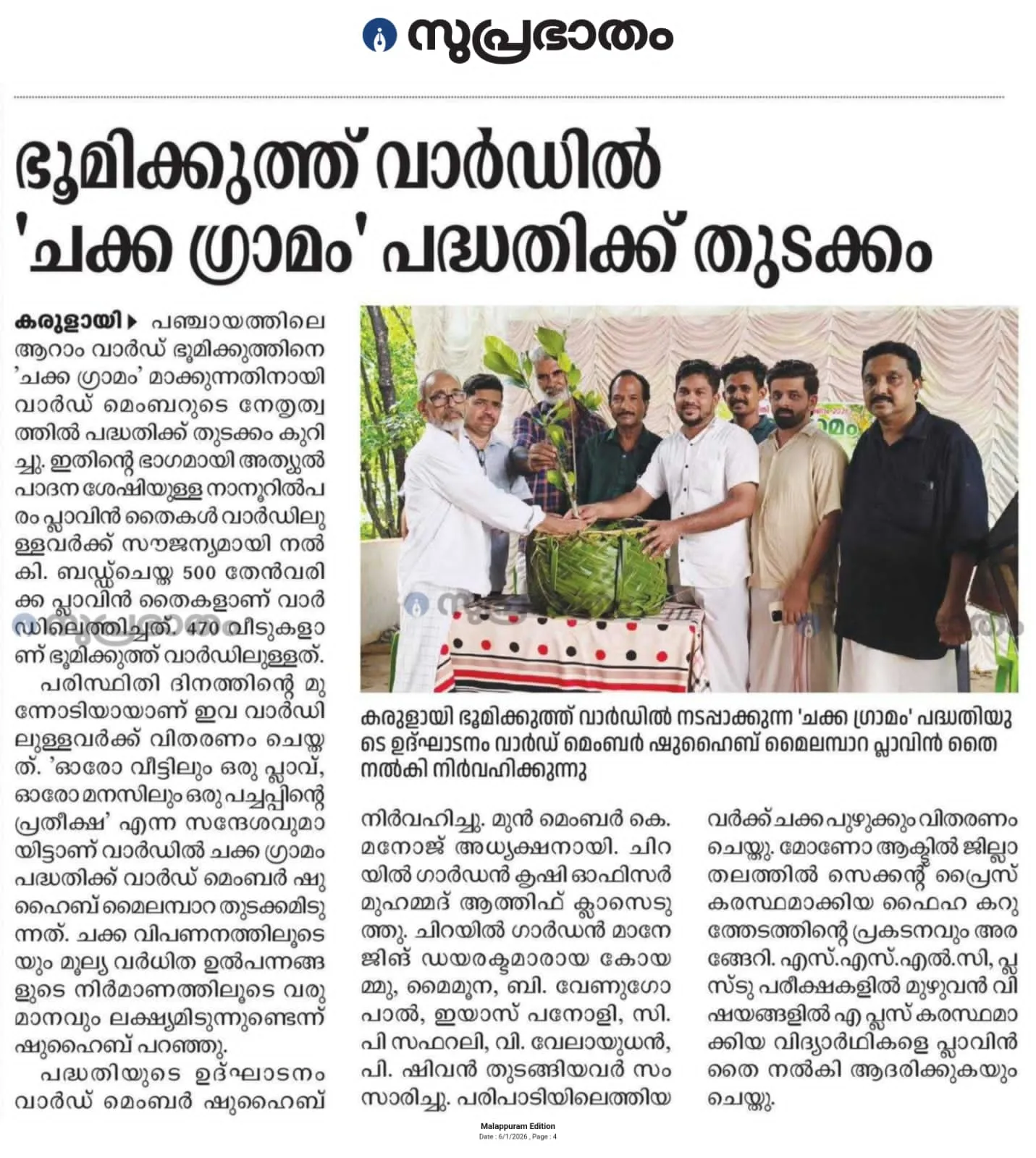
Jackfruit, one of Kerala's most valuable native fruits, is gaining renewed attention through the "Chakka Gram" (Jackfruit Village) initiative launched at Bhoomikuth Ward in Karulai Panchayat, Malappuram. The program aims to encourage large-scale jackfruit cultivation, conserve traditional varieties, and create sustainable income opportunities for local farmers.
As part of the initiative, hundreds of high-quality jackfruit saplings were distributed to residents, marking an important step toward increasing green cover and promoting eco-friendly agriculture. The event witnessed the participation of local leaders, farmers, agricultural experts, and community members who expressed strong support for preserving Kerala's rich agricultural heritage.
Objectives of the Chakka Gram Project
The initiative focuses on:
- Promoting sustainable jackfruit cultivation.
- Conserving indigenous jackfruit varieties.
- Supporting local farmers with quality planting materials.
- Encouraging environmentally friendly farming practices.
- Increasing household income through value-added jackfruit products.
- Enhancing food security and biodiversity.
Why Jackfruit Matters
Jackfruit is widely regarded as one of Kerala's most nutritious and versatile fruits. Rich in dietary fiber, vitamins, antioxidants, and essential minerals, it serves as an excellent source of nutrition while offering significant commercial potential.
With increasing global demand for jackfruit-based food products, expanding cultivation can create new business opportunities for farmers and rural entrepreneurs.
A Step Towards Sustainable Agriculture
The "Chakka Gram" project reflects a community-driven effort to strengthen Kerala's agricultural future. By distributing quality saplings and encouraging widespread cultivation, the initiative aims to transform villages into thriving centers of sustainable jackfruit production while preserving the state's natural heritage for future generations.